Tibetan Prayer Wheels
 Prayer wheels - of varying sizes - are another popular item of Tibetan
souvenir. It's one of the most
popular ways of accumulating merit in Tibetan Buddhism. Even
if you're not a Buddhist - make a great rustic souvenir with their
combination of wood, metal, and often turquoise and coral. Sizes vary
from maybe 10cm to over half a meter.
we provide a fair estimate of the types and sizes on offer.
Prayer wheels - of varying sizes - are another popular item of Tibetan
souvenir. It's one of the most
popular ways of accumulating merit in Tibetan Buddhism. Even
if you're not a Buddhist - make a great rustic souvenir with their
combination of wood, metal, and often turquoise and coral. Sizes vary
from maybe 10cm to over half a meter.
we provide a fair estimate of the types and sizes on offer. We also have a special selection of Tibetan Prayer wheel. If u like to have some, please contact us. I'll sell reasonable price:
Table Top Tibetan Prayer Wheels
 |
| $ 80. |
 |
| $ 50. |
 |
| $ 80. |
 |
| $ 70. |
 |
| price: Qty base. |


Our authentic table top Tibetan Prayer Wheels are a wonderful way to bring the energy of the prayer wheel to your home and environment. A combination of ancient tradition and modern technology, they are then specially filled with over Millions of copies of the Mantra:
The practice of turning the Prayer Wheel, or even
wearing or having in one’s home, is said to be of immeasurable benefit
for oneself and others. Buddhist teachers and the ancient texts expound
the profound benefits of the Prayer Wheel for its ability to quickly
harmonize the environment, promote healing, increase compassion, and
assist practitioners on their journeys to enlightenment.
2) Classic Table Top Prayer Wheel


3) Wall pray wheel:
 |
| $ 150. |
 |
| $ 70. |


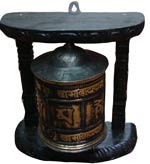


Beautiful
solid brass and copper wall mount prayer wheel with exquisite hand carved solid hardwood frame., great for hanging by
door or other favorite location.
3) Hand held pray wheels:


Hand held prayer wheel with inlayed mantra lettering and colored stones,
antiqued wood handle, Double Dorje etching on copper bottom.
4) Pendent pray wheel:
Wearing a Pendant Prayer Wheel is a
wonderful way to have the energy and positive benefits of the prayer
wheel with you wherever you may be. These very special pendant prayer
wheels are designed to spin and are available in several choices.
These
extraordinary
Pendant Prayer Wheels are beautifully designed and handcrafted in pure
silver or of Tibetan coin silver and beautifully detailed
filigree work on the outside.
5) Earring pray wheel:Read more about Prayer Wheel:
Prayer first came into being in Tibet where they were called the Mani wheels Chos-'khor, or precious Dharma wheel. Prayer wheels are an accepted form of prayer used by Buddhists. The wheels allow the illiterate and blind to pray, as well as monks and laymen.
History:
Prayer wheels, or Mani wheels, were first created in Tibet about 2,000 years ago. The invention is credited to the Buddhist master Nagarjuna, who first placed written verses in a cylinder and used them as a form of prayer.
History:
Prayer wheels, or Mani wheels, were first created in Tibet about 2,000 years ago. The invention is credited to the Buddhist master Nagarjuna, who first placed written verses in a cylinder and used them as a form of prayer.
Benefits:
The power of the Prayer Wheel comes from
the Buddhist belief that this inscription of this mantra Om Mani Padme Hum
allows you to gain the attention of the God of the Compassion or Chenrezig.
Buddhist Mantra dictates that when this inscription is read out loud or read
silently, then this brings a positive well being to the person who is reading
it. In fact, according to the Buddhist beliefs, you could even just see the
inscription and you would still be able to benefit from its positive effects.
Thus, whether you read it or just look at it you gain some positive force as a
result. Hence the Tibetan Prayer Wheels are designed to rotate around their
axis in a clockwise fashion (The spinning direction of the Universe according
to the Buddhist Dharma) and thus any time you set your eyes on the inscription
or if you read it as it passes you, you gain the benefits of these mantras.
Features:
Prayer wheels are a wooden or metal cylinder illustrated with or containing a written prayer, spun clockwise. The prayer wheels can be small hand-held cylinders illustrated with a single prayer, or large ornate drums with numerous inscriptions.
The Tibetan Prayer Wheels are hence
destined to be light and they could be turned just by the flick of your wrist.
You can see many Tibetans, who are constantly spinning the Tibetan Prayer Wheel
as they go about their daily tasks. The instrument is designed to be practical
and easy to carry and thus many people use it to pray, while they are immersed
in their daily activities.
Of course, there are larger prayer wheels
that are designed to be several meters long. In these Prayer Wheels, long
inscriptions and mantras can be written. According to the Buddhist belief, a large
prayer wheel situated in an area will disperse peace and tranquility, as long
as it is active and spinning.
Considerations::Prayer wheel usage is currently restricted in Tibet, but their use has spread over much of the world. The Dalai Lama has said that having a Buddhist prayer on your hard drive enables anyone with a computer to have a functioning prayer wheel.

The prayer wheel lineage was brought to Tibet by the renowned eight century Indian Buddhist teacher Padmasambhava, and later practiced by the great Indian tantric Buddhist masters Tilopa and Naropa. Naropa’s disciple Marpa later renewed the lineage in Tibet and passed it on to Tibet’s most well known yogi, Milarepa. Since that time the Prayer Wheel has been passed on through a continuous lineage of enlightened teachers, among these the great Kagyu master Karma Pagshi, whose important works are quoted by most subsequent writers on the subject. In Tibet, Prayer Wheels have been made for many centuries in a wide range of sizes and styles - from hand-held and table-top wheels, all the way up to giant eight or twelve foot Prayer Wheels with diameters of five to six feet. Often built around Buddhist Stupas and Monasteries, there may be long rows of prayer wheels which people will spin as they walk clockwise around the building, reciting what is considered to be one of the most profound and beneficial mantras;

In the translation of a text by the Fourth Panchen Lama, Amitabha Buddha says “Anyone who recites the six syllables while turning the dharma wheel at the same time is equal in fortune to the Thousand Buddhas.” In the same text Shakyamuni Buddha says that "turning the prayer wheel once is better than having done one, seven, or nine years of retreat" The prayer wheel is a very powerful merit field; one accumulates extensive merit and purifies obstacles.
It has been well known for over a thousand years by the great Buddhist yogis and teachers as well as the Tibetan people that the prayer wheel practice is an extremely quick, simple and profound method for developing compassion and wisdom. Buddhist teachers and the ancient texts expound the profound benefits of the Prayer Wheel for its ability to quickly harmonize the environment, increase compassion, encourage a peaceful state of mind, and assist practitioners on their journeys to enlightenment.

Prayer wheels are usually filled with the mantra of Avalokiteshvara, the Buddha of great compassion. OM MANI PADME HUM. So much of the spiritual power of the prayer wheel derives from the power of this sacred mantra that by connecting with the energy of the prayer wheel one is connecting with an outer manifestation of unlimited enlightened compassion, and is awakening one’s own highest potential - one’s Buddha nature. Ultimately, the subject of mantras and of how they function in Buddhist practice is extremely vast and profound. The important thing to understand here is that the mantra is not a prayer to a divine being; rather, the mantra - whether recited, written or spun - is enlightenment immediately manifest.
 |
| big pray wheel |
A number of Tibetan commentaries state that having a prayer wheel in a building makes that place become like the Potala - the pure land of the Buddha. People that own prayer wheels all agree that having one near them in theirhome feels wonderful. The prayer wheel’s beauty and energy really does have a very clear and positive effect.
Sacred objects like prayer wheels help one to develop positive qualities in/of the mind. Buddhist teachers emphasize how everything comes into being based on causes and conditions, and developing positive inner qualities depends on many causes and conditions, including environmental factors.
Many people have noted how having a prayer wheel near them helps them meditate more effectively, or to more easily develop positive states of mind. Most Tibetans may have began using their prayer wheels based on faith, but continued to engage in the practice throughout their lives based on their own experience of it leading to more peaceful, joyful, and virtuous mental states. The Traditional Prayer Wheel Practice - Is to spin the prayer wheel in a clockwise direction, recite the mantra OM MANI PADME HUM and visualize pure white light rays being emanated out from the spinning prayer wheel, this pure light comes from the millions of mantras inside the prayer wheel and goes out to ourselves and all sentient beings, purifying, healing, completely illuminating everyone, as the light rays spread throughout the whole vast universe we all instantly become awakened and realize the Four Immeasurables of Love, Compassion, Joy and Equanimity. If you possess one quality, it would be as if you had all enlightened qualities in the very palm of your hand. Which quality? Great compassion.